

HOW MUCH TIME DOES YOUR TEAM WASTE FORMATTING WORD DOCUMENTS?
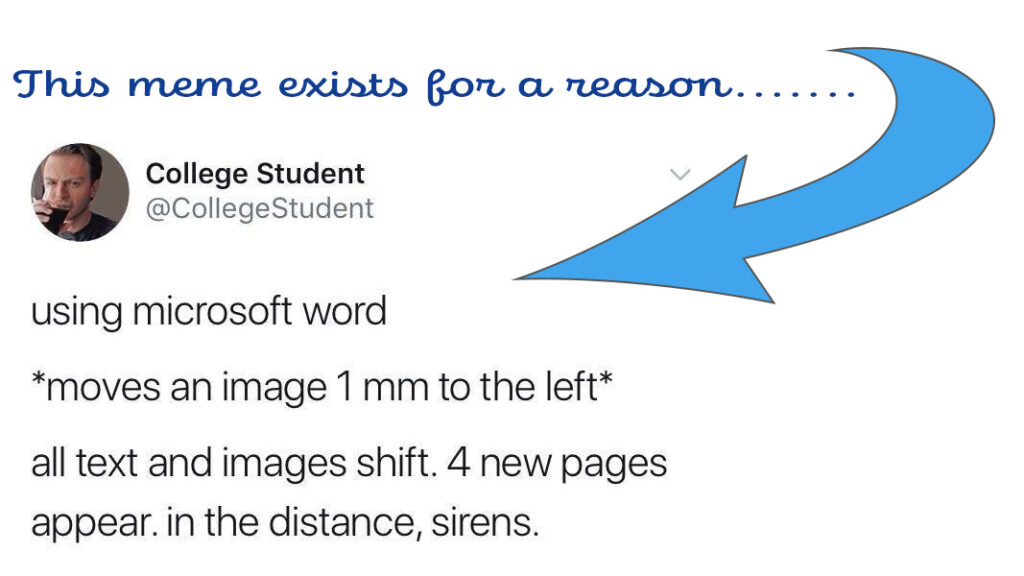
- On average, 30 to 50% of the total document development labor hours were dedicated just to formatting. These results ranged due to the varying levels of Word proficiency among the writers and the “as-found” issues within the document that were created over its own life-cycle (previous revisions)1
- Many content technical errors were attributed to the distraction of formatting2
- Time is money!
- https://www.proceduresolutionsmgmt.com/blog/formatting
Formatting Word docs correctly is frustrating if you don’t do it every day. Styles, footnotes, cross references, table of contents – these features that level up the professionalism of your document can be daunting You can be a great writer but if your document looks like the .50 cent table at a yard sale, THAT is what will get attention, not your carefully crafted content.
If you are sending your proposal to a government agency, it needs to be Section 508 and WCAG compliant, which is complicated and time-consuming without remediation expertise and tools. I am a DHS Trusted Tester and expert in the remediation of complex, high-page count documents to resolve all issues preventing your document from fully complying with state and federal regulations.
Why are you spending your valuable time fighting with Word and Acrobat? I can format your document, check your cross-refs, generate your Table of Contents, set up a bibliography, then convert the document to a Section 508-compliant accessible PDF – all while you go back to working on your next project, knowing you’ll be looking good (and complying with all legal requirements!) when you deliver your project to your client.
Although the majority of Section 508 lawsuits are related to Food & Beverage and E-commerce/Retail websites, there has been a large increase in lawsuits against all types of entities – including government agencies. Even Beyonce was sued – AND LOST – for a lack of accessibility on her website!
Most Section 508 lawsuits are brought by an individual in conjunction with the National Federation of the Blind (NFB). Adding the weight of NFB to these suits sends a message to thousands of agencies and affected businesses: If there is a legitimate complaint, your website and documents must be made accessible. If you are a state or federal contractor, your relationship with government entities could be terminated for non-compliance. You can also be sued by individuals for non-compliance and the resolution of the lawsuit may include monetary damages in addition to forced compliance. A common complaint about complying with Section 508 is “we can’t afford to do accessibility” – but in today’s legal environment, you can’t afford NOT to do accessibility.
The federal deadline for accessibility compliance was extended this year and is rapidly approaching:
- Recipients with 15 or more employees will now have until May 11, 2027, to comply.
- Recipients with fewer than 15 employees will now have until May 10, 2028, to comply.
Many organizations are taking shortcuts to compliance, including:
- Using automated tools, including AI, to claim that documents ‘pass’ without checking for actual compliance with accessibility standards set forth by WCAG. AUTOMATED TOOLS ARE NOT AN ADEQUATE DEFENSE IN A LAWSUIT. DOCUMENTS MUST BE ACCESSIBLE AND USABLE – SIMPLY ‘PASSING’ DOES NOT MEET THE LEGAL STANDARD.
- Removing documents from the web without receiving an appropriate waiver to avoid making the documents compliant. IF A DOCUMENT PROVIDES INFORMATION IN THE PUBLIC INTEREST, IT MUST BE BOTH AVAILABLE AND ACCESSIBLE. IN THE ABSENCE OF A WAIVER FROM THE FEDERAL GOVERNMENT, REMOVING DOCUMENTS FROM THE WEB TO AVOID MAKING THEM ACCESSIBLE WILL MAKE YOU MORE, NOT LESS, LIABLE FOR DAMAGES.
A workflow designed for accessibility starts with well-designed Word templates and ends with a WCAG/PDF-UA-compliant document backed by reporting demonstrating compliance with each element of the requirements and manual checks using a screenreader (I use NVDA). It includes training for your staff to integrate ‘accessibility-thinking’ into every aspect of document creation, ensuring that remaining compliant with Section 508 is an ongoing effort – not a mad scramble to do ‘clean up’ at the end of a document’s journey. An ‘accessibility life cycle’ strategy ultimately lowers the cost of compliance and makes your organization more competitive, especially if you are a state or federal government contractor.
The bottom line: Accessibility and document remediation are not optional. You need a trusted partner to ensure that you are complying with both the letter and the spirit of the law and who can guide you towards building a workflow that is designed for accessibility from document inception to completion. Melissa Raulston is the partner of choice for companies who prefer to develop a relationship with a service provider rather than be just another invoice number to a large impersonal company. Melissa knows you, your company, your document production schedule, and works with you to meet even the tightest turn-around times – she has NEVER missed a deadline!

I am your personal Microsoft-Certified word.expert and a DHS Trusted Tester, providing the fast, professional help you need to make your documents shine. Struggling with Word formatting and Section 508 compliance is an unprofitable time-sink. Time is money – I can do it faster than you can, freeing up your time and energy for the work YOU do best. If you are struggling to make your documents look GREAT, I’d like to have a WORD with you!
